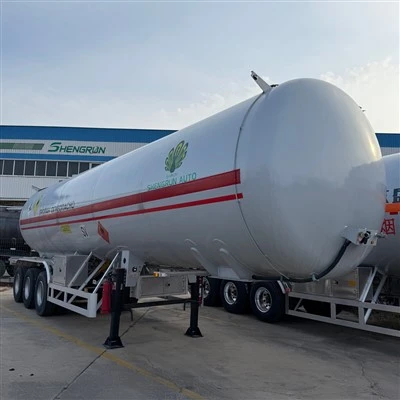

As a supplier of transport semi - trailers, I've witnessed firsthand how different suspension types can significantly impact the ride quality of these heavy - duty vehicles. In this blog, I'll explore the various suspension systems used in transport semi - trailers and discuss their effects on ride quality.
Types of Suspension Systems in Transport Semi - Trailers
Leaf Spring Suspension
Leaf spring suspension is one of the oldest and most commonly used suspension systems in transport semi - trailers. It consists of multiple layers of curved metal strips, known as leaves, stacked on top of each other. The leaves are attached to the axle and the trailer frame.
The main advantage of leaf spring suspension is its simplicity and durability. It can handle heavy loads effectively and is relatively inexpensive to manufacture and maintain. However, leaf spring suspension has some drawbacks when it comes to ride quality. The stiffness of the leaf springs can cause a rough ride, especially on uneven roads. The vibrations from the road surface are directly transmitted to the trailer, which can lead to discomfort for the driver and potential damage to the cargo.
Air Suspension
Air suspension uses airbags instead of traditional springs to support the weight of the trailer. The airbags are filled with compressed air, and their pressure can be adjusted to provide a more comfortable ride.
One of the key benefits of air suspension is its ability to adapt to different road conditions and loads. When the trailer is carrying a heavy load, the air pressure in the bags can be increased to provide more support. On the other hand, when the load is light, the air pressure can be reduced to give a softer ride. Air suspension also does a better job of isolating the trailer from road vibrations compared to leaf spring suspension. This results in a smoother ride, which is not only more comfortable for the driver but also helps to protect the cargo from damage.
However, air suspension systems are more complex and expensive than leaf spring suspensions. They require additional components such as air compressors, valves, and sensors, which can increase the cost of purchase and maintenance.
Rubber Suspension
Rubber suspension uses rubber blocks or components to absorb shocks and vibrations. These rubber elements are designed to compress and rebound, providing a cushioning effect.
Rubber suspension offers a good balance between cost and performance. It is more affordable than air suspension and provides a smoother ride than leaf spring suspension. The rubber components can effectively dampen vibrations, reducing the impact on the trailer and its cargo. Additionally, rubber suspension is relatively easy to install and maintain.
Hydraulic Suspension
Hydraulic suspension systems use hydraulic fluid to control the movement of the suspension. They can provide precise control over the ride height and damping characteristics of the trailer.
Hydraulic suspension is often used in high - end transport semi - trailers or those that require precise handling. It can offer a very smooth and comfortable ride, as the hydraulic system can quickly adjust to changes in road conditions and load. However, like air suspension, hydraulic suspension is complex and expensive. It requires regular maintenance to ensure proper functioning.
Impact of Suspension Types on Ride Quality
Comfort for the Driver
The ride quality of a transport semi - trailer has a direct impact on the comfort of the driver. A rough ride can cause fatigue, which can affect the driver's concentration and safety on the road. Air suspension and hydraulic suspension are generally considered the best options for driver comfort. They can effectively reduce vibrations and provide a smooth ride, even on bumpy roads. Leaf spring suspension, on the other hand, can be quite harsh, especially on long - distance trips.
Protection of the Cargo
The type of suspension also plays a crucial role in protecting the cargo. Fragile or sensitive goods can be easily damaged by excessive vibrations and shocks. Air suspension and rubber suspension are better at isolating the cargo from road disturbances. They can help to keep the cargo stable and reduce the risk of damage during transit. For example, when transporting delicate electronics or glassware, a trailer with air suspension would be a more suitable choice.
Handling and Stability
Suspension systems can also affect the handling and stability of the transport semi - trailer. A well - designed suspension can improve the trailer's ability to corner, brake, and accelerate smoothly. Hydraulic suspension, in particular, can provide excellent handling characteristics by precisely controlling the movement of the wheels. Leaf spring suspension, while it can handle heavy loads, may not offer the same level of handling precision.
Our Offerings
At our company, we offer a wide range of transport semi - trailers with different suspension types to meet the diverse needs of our customers. For example, our Gooseneck Lowbed Trailer is available with both leaf spring and air suspension options. The leaf spring version is suitable for customers on a budget who need a reliable and durable trailer for heavy - duty applications. The air suspension version, on the other hand, is ideal for those who prioritize ride quality and cargo protection.
Our Container Skeleton Semi Trailer also comes with various suspension choices. Rubber suspension is a popular option for this type of trailer, as it provides a good balance of cost - effectiveness and performance.


If you're in the market for a Transport Semi Trailer, we can help you choose the right suspension system based on your specific requirements. Whether you need a trailer for long - distance hauling, local deliveries, or specialized cargo, we have the expertise to provide you with the best solution.
Contact Us for Purchase and Negotiation
If you're interested in learning more about our transport semi - trailers and the different suspension options available, we encourage you to contact us. Our team of experts is ready to answer your questions, provide detailed product information, and assist you in the purchasing process. We believe in building long - term relationships with our customers, and we're committed to providing high - quality products and excellent customer service.
References
- Smith, J. (2018). "Suspension Systems in Heavy - Duty Vehicles". Journal of Automotive Engineering.
- Johnson, A. (2019). "Impact of Suspension Types on Ride Quality and Cargo Safety". Transport Research Quarterly.
- Brown, C. (2020). "Advances in Semi - Trailer Suspension Technology". International Journal of Transportation Science.