When a drive axle starts making noise, leaking oil, or showing excessive wear, replacing it with a completely new unit can be expensive. For trucks, wheel loaders, construction machinery, forklifts, and other heavy equipment, a remanufactured or rebuilt drive axle is another option.
The two terms are often used interchangeably, but they do not always describe the same work. The exact process also depends on the supplier. So when comparing axles, it is better to ask what has actually been done to the unit.
Remanufactured Drive Axle
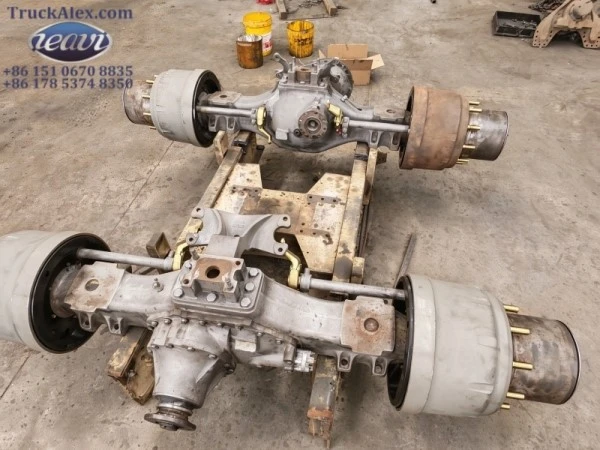
A remanufactured drive axle normally starts with a used axle core. The axle is taken apart, cleaned, and inspected piece by piece.
Gears are checked for tooth wear and surface damage. Shafts are measured for wear, while the housing is inspected for cracks or deformation. Bearings, seals, and other worn parts are usually replaced. Components that are still within the required limits can be reused.
Some parts may need machining before they can be used again. After the axle is assembled, the supplier may check gear engagement, backlash, rotation, and oil leakage.
The process is generally more comprehensive because the complete axle is inspected instead of repairing only the part that has failed.
Rebuilt Drive Axle
A rebuilt drive axle is usually repaired based on the condition of the used unit.
For example, an axle may have worn bearings and damaged seals, while the gears, shafts, and housing are still in usable condition. In this case, the worn parts can be replaced and the other components checked before assembly.
The amount of work can be quite different from one rebuild to another. One axle may need several new internal parts, while another may only require bearings and seals. This is why the word "rebuilt" does not tell you exactly how much work has been done.
For buyers, the parts list and inspection details are more useful than the name itself.
Which One Should You Buy?
There is no simple answer based only on the words "remanufactured" and "rebuilt." What matters is the condition of the axle and the work carried out by the supplier.
Before placing an order, check the axle model, gear ratio, mounting dimensions, input shaft, differential configuration, and brake arrangement. Ask which parts are new and which parts have been reused.
The gear ratio needs particular attention. Two axles may have a similar appearance but use different ratios, so they may not be suitable for the same machine.
If you are buying from an overseas supplier, sending photos of the existing axle and its identification plate can make identification easier. The machine model and original part number are also useful.
A good comparison should therefore focus on the actual axle: which components were inspected, which were replaced, which were reused, and whether the finished unit was tested before delivery. That information is much more useful than simply choosing between the labels "remanufactured" and "rebuilt."